Engineered stone workers get lung transplants as industry pushes Congress for legal shield
Worker illnesses part of a growing silicosis crisis tied to countertop fabrication work
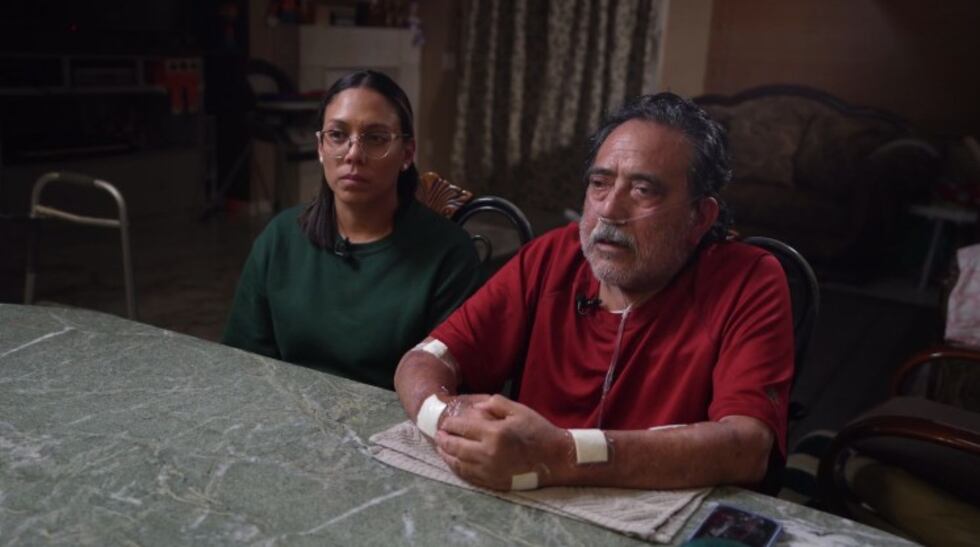
CALIFORNIA - (InvestigateTV) — Rodolfo Figueroa, 70, returned home from the hospital Nov. 20 after receiving a lung transplant, a procedure doctors said was necessary to save his life after decades of cutting stone countertops left him unable to breathe. Two weeks before his discharge, his daughter Jennifer rushed him to the emergency room after his oxygen levels dropped critically low.
“I can’t picture our family gathering without him,” Jennifer Figueroa said. “I don’t think we’d ever be whole again.”
Figueroa described his experience with the illness in simple terms. “I live something very terrible,” he said. “I mean, very bad.”
Decades of work, a deadly exposure
Figueroa spent four decades making countertops, starting with natural stones like marble before also starting to cut engineered, or artificial stone, a man-made product composed of crushed quartz mixed with resins and polymers.
Government reports by the National Institute for Occupational Safety & Health (NIOSH) show engineered stone contains silica levels as high as 90 percent, higher than natural stones like marble and granite. Health professionals say breathing nano-sized silica particles that penetrate deep into the lungs can cause silicosis, an incurable disease.
Figueroa is one of 54 men the state of California says have required lung transplants due to their work with engineered stone.
More than 500 cases in California alone
California is the only state actively tracking silicosis cases linked to engineered stone fabrication. Its data shows the number of workers diagnosed has climbed to more than 500, nearly all of them Latino men. Twenty-nine workers have died.
Engineered stone slab manufacturers now face hundreds of lawsuits over those illnesses and deaths, including one filed by Figueroa.
Industry seeks congressional protection
In January, at a House subcommittee hearing, manufacturers told legislators they are being unfairly blamed for worker illnesses. “The wrong parties are being sued,” said Rebecca Shult, chief legal officer for Cambria, a U.S.-based engineered stone slab manufacturer. Manufacturers are seeking passage of H.R.5437, a bill that would remove their legal responsibility for worker illnesses or deaths.
“The lawsuits are overwhelming good companies throughout our industry,” Shult said.
Manufacturers point to safety measures
At Cambria, the largest domestic stone manufacturer in the U.S., Vice President Micah Aberson said his company keeps workers safe through wet cutting, using water to suppress dust and by maintaining silica particle levels below the federal OSHA limit at its manufacturing plant and fabrication shop.
“All you need is wet tooling, wet processing, appropriate ventilation and air monitoring. And you can run a safe operation,” Aberson said.
Aberson said small fabrication shops that cut engineered stone products, including Cambria’s, can apply those same practices to protect their workers.
But Georgia Tech research scientist Dr. Jenny Houlroyd, who has worked with local fabrication shops in Georgia for more than 20 years, said consistent compliance is rare among the hundreds of small shops operating nationwide.
“It’s incredibly hard to guarantee that these workers are protected from this exposure,” Houlroyd said.
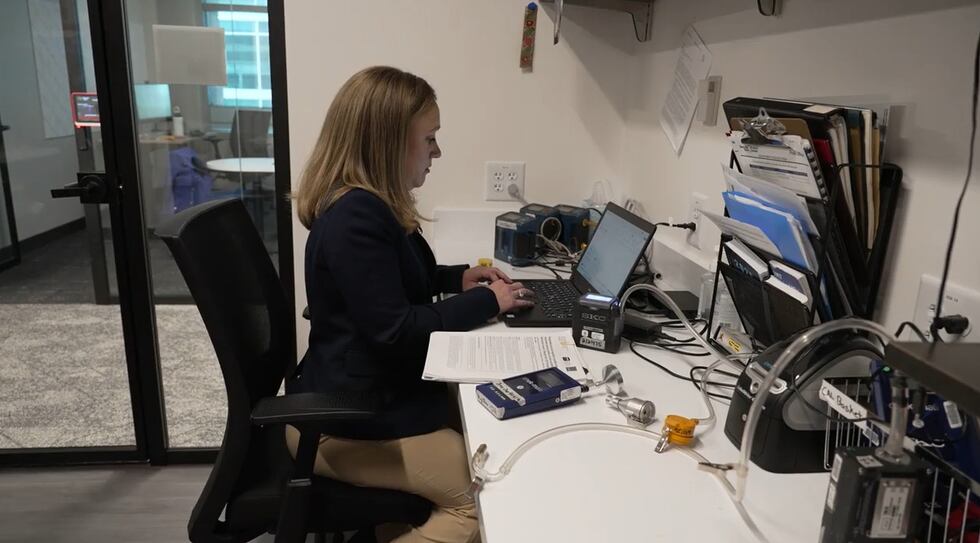
OSHA’s legal limit for respirable crystalline silica is 50 micrograms per cubic meter of air, averaged over an eight-hour workday. Houlroyd said she has not seen shops consistently meet that standard.
“Sometimes they can get it together for one day. But the work is so variable day to day that they typically can’t do it consistently,” she said.
Study finds wet cutting still falls short
In a study published last year, Houlroyd and colleagues found that even when companies used wet cutting methods with engineered stone products, nearly 50 percent of workers still exceeded OSHA’s exposure limit.
“It’s kind of like getting all the planets to align. You have to have everything go right to protect the workers,” Houlroyd said. “So even with controls, with this higher silica content, it’s virtually impossible to control the exposures.”
California adopted new worker protection rules, including a wet-cutting requirement and increased inspections. State inspectors temporarily shut down some shops on one street in 2024 due to violations. When reporters returned to that street in November, workers were still observed using unsafe practices, including dry-cutting, which the state has banned.
Houlroyd estimates 20,000 to 30,000 workers nationwide could develop silicosis.
Industry and legal experts disagree on responsibility
Some slab manufacturers say shops need to follow OSHA’s rules regardless of the type of stone they’re cutting, with Cambria citing the natural stone quartzite as an example because it also contains silica at or above 90 percent.
“If we don’t solve the underlying workplace safety issues, it will not stop the problem”, said Cambria’s Micah Aberson.
But former OSHA official David Michaels, an epidemiologist and professor at the George Washington University Milken Institute School of Public Health, said not all stone products, natural and man-made, have the same health effects.
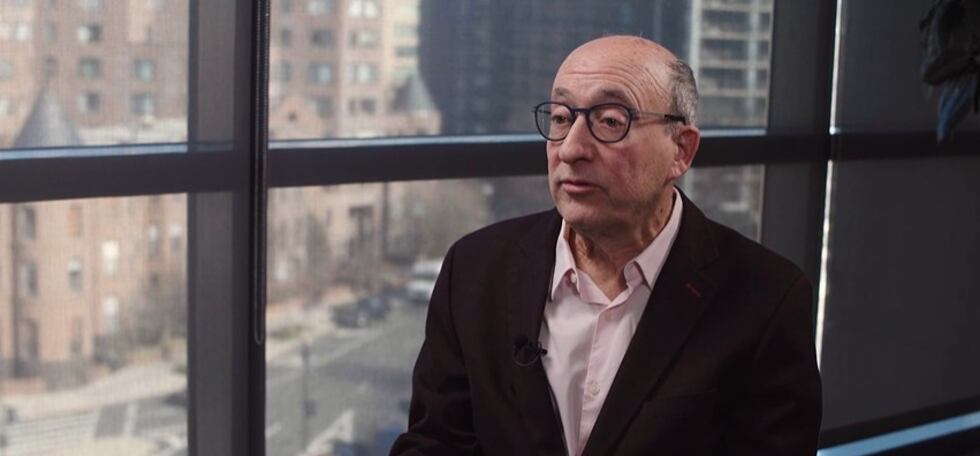
“If the stone product is not very fine, it’s less dangerous than the very fine flour essentially that goes into artificial (engineered) stone”, Michaels said. He explained that while workers need protection from all materials, that in regard to engineered stone, which also contains resins and polymers, “this particular product that we’re talking about here is clearly far more pernicious. And that’s why we really should move to a safer product. “
California attorney James Nevin, who represents Figueroa and other affected workers, said manufacturers cannot claim ignorance of how their product is used.
“The whole chain has been created by the slab manufacturers,” Nevin said. “It’s not like, oh, we didn’t know that this was going to happen. We didn’t know that our product was going to be fabricated. It’s designed to be fabricated.”
‘I’m still here’
At his home north of Los Angeles, Figueroa said he is grateful to have survived. “I can say I feeling happy because I’m in life. I’m still here,” he said.
His wife, Ana, said the transplant may only extend his life by a few more years. “I don’t see my life without him,” she said. “I don’t want to live without him.”
Figueroa said he was unaware of H.R. 5437 until reporters told him about it. Asked what he believes the companies think of workers like himself, he said: “I don’t think...they don’t think about us.”
Australia has banned engineered stone. Occupational health doctors in California have petitioned for a ban there as well.
Copyright 2026 Gray Media Group, Inc. All Rights Reserved.